
Tax Credits Up To $2000 Available On Qualifying Heat Pumps

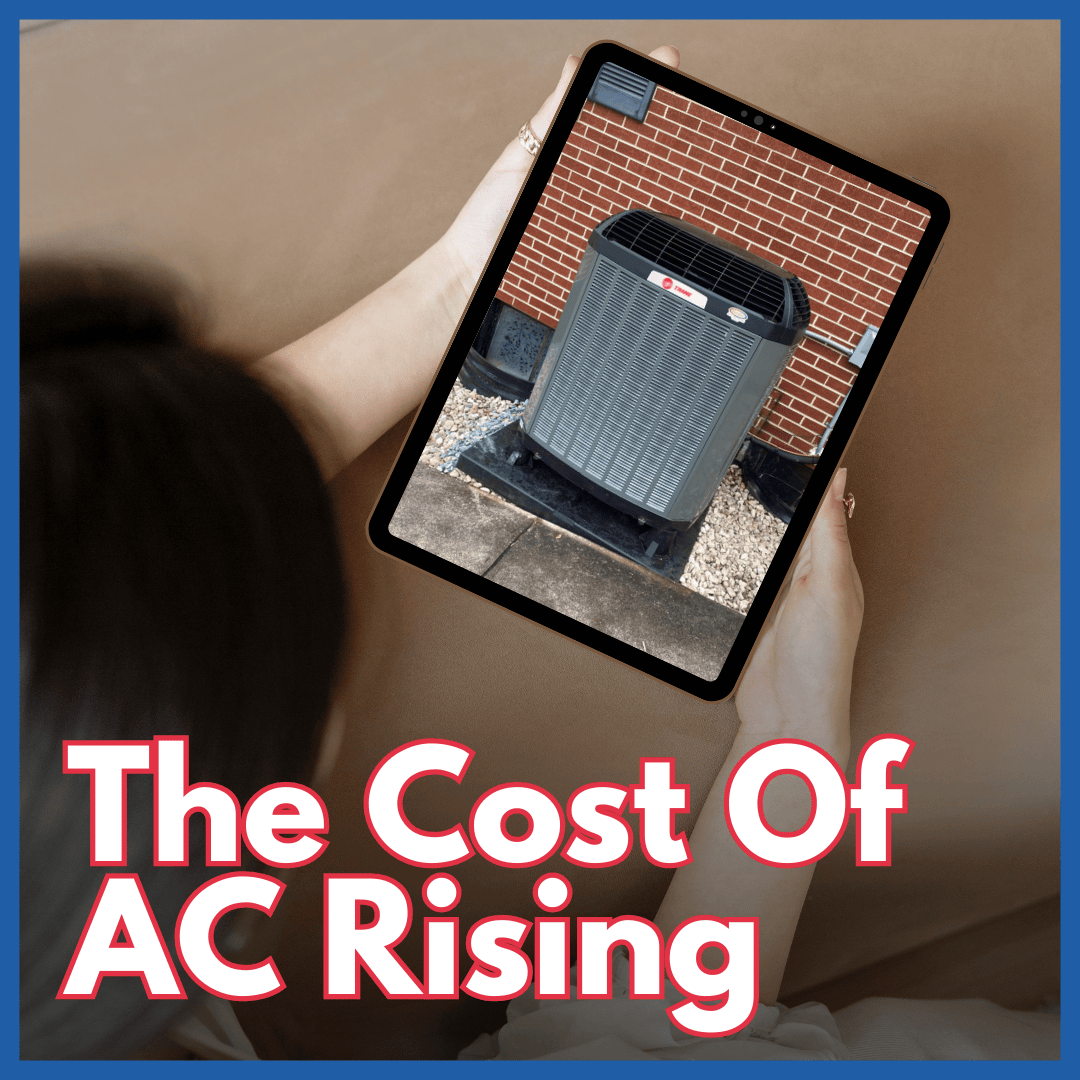
The Price Of AC Rising In 2023 – 2024

In the past few years, especially with the supply chain issues caused by the pandemic, we see the prices of air conditioners and heating systems rise. Unfortunately, we are expecting the price of air conditioners to rise again in 2023-2024. 


We have been quoting and installing air conditioning systems all summer long, and something we are hearing from our suppliers is that they expect the prices to rise by 25-50% next year. Trane, one of our favorite brands, announced in May their commercial prices were rising from 4-6%. We feel that it’s our responsibility to let our customers and community know now, so they are not shocked next year when the increase in prices happens.

Why Are Prices Rising?

Prices rising isn’t anything new. As time passes, the price on every product and service generally increases. The issue is that it geneally doesn’t increase in such a steep manner. There are a few different reasons that the price of air conditioners is predicted to rise so much in the following year: 

  • New DOE Efficiency Requirements 

  • New Construction Guidelines

  • Increasing Cost Of Materials

New DOE Efficiency Requirements 

As a part of an effort to make our country more energy efficient, and reduce our carbon footprint, the United States Department of Energy (DOE) has raised the efficiency standard for new AC systems for the first time since 2015. For our area in Virginia, we are considered the southern region, which has a different set standard that the northern states. 


It is required that all new AC systems have a SEER2 rating of 14.3 minimum or SEER rating of 15 minimum if the system is less that 45 kBtuhs. If the system is between 45-65 kBtuhs, then the minimum rating is 13.8 SEER2 or 14.5 SEER. The point truly is, the more efficient an AC system is, the more it will cost. If the minimum efficiency rating standard is increasing, it means the minimum price that can be paid for an AC system is also increasing. 

New Construction Guidelines

Along with the requirements for new AC replacements, it also comes with requirements for new construction. Any new construction that has HVAC included, which most new construction does, also have to meet these requirements. This brings the cost of new homes and commercial spaces up, but also keeps the AC prices high as well. 

Increasing Cost of Materials

HVAC systems are complex and require high-quality parts and components. Most of these are made from different types of metals, electrical components, plastics, etc. All of these materials are continuing to rise in price. Even though the supply chain has mostly caught up since the pandemic, we are still seeing spikes in different costs of material.

The combination of new requirements, inflation, and the costs of materials are driving the price of AC up.

Saving Money When You Install A New AC

We do have some options for you to keep your costs as low as possible for a new AC, without sacrificing comfort.

  • Rebates and Tax Credits

  • Energy Savings

  • Installing Before Prices Rise

Rebates and Tax Credits
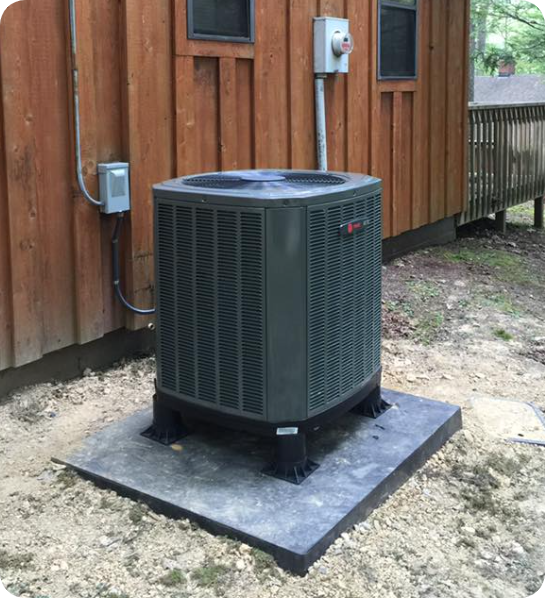
The Prices Of AC In The US Are Rising

Through the Inflation Reduction Act, there are now tax credits up to $2000 for a new heat pump, and up to $600 for a new AC system available. Depending on the efficiency of your new AC system, rebates may be available as well. For example, in Virginia, Dominion Energy offers up to $500 in rebates for a new central AC system or heat pump that meets the Energy Star Qualifications. 


We recommend checking with your energy supplier to see if there are rebates available for an HVAC upgrade, or just ask the experts at Complete Comfort and we can help you get pointed in the direction of the best AC with the most savings available. 

Energy Savings

You have to consider that when you install a new high efficiency air conditioning system, you are also going to start using less energy to cool your home or business. Even though the initial cost is higher than a less efficient system, the amount of money you spend on energy is going to be less, over a long period of time. Your new AC should last for 10-20 years, and could be saving you hundreds, even thousands of dollars every summer depending on the size of your space. When you cost this out over the lifespan of your AC system, it’s going to equal huge savings on energy bills. 

Installing Before Prices Rise

We have been encouraging people to install a new AC system now, before the prices take a sharp rise next year. When you think about it, if you are in need of a new AC system now, it’s only going to become a growing need as time goes on. Unless Benjamin Button installed your air conditioner, it won’t be getting any younger. 


We recommend that you install a new AC system as soon as possible. If you install an air conditioner now, you will be doing a few things: 


  • Purchasing the system before prices rise

  • Installing a new, more efficient system that will reduce energy bills

  • Improving your home comfort for the rest of the season 


You will take care of your problem right away, and save the most money possible. We can help you choose the right system for your home, find the right rebates and tax credits, and also help with financing.

If you live in Chilhowie, VA, or the surrounding areas and you know it’s time to make the replacement, give us a call at (276) 690-9222 or click here to schedule a free AC consultation.

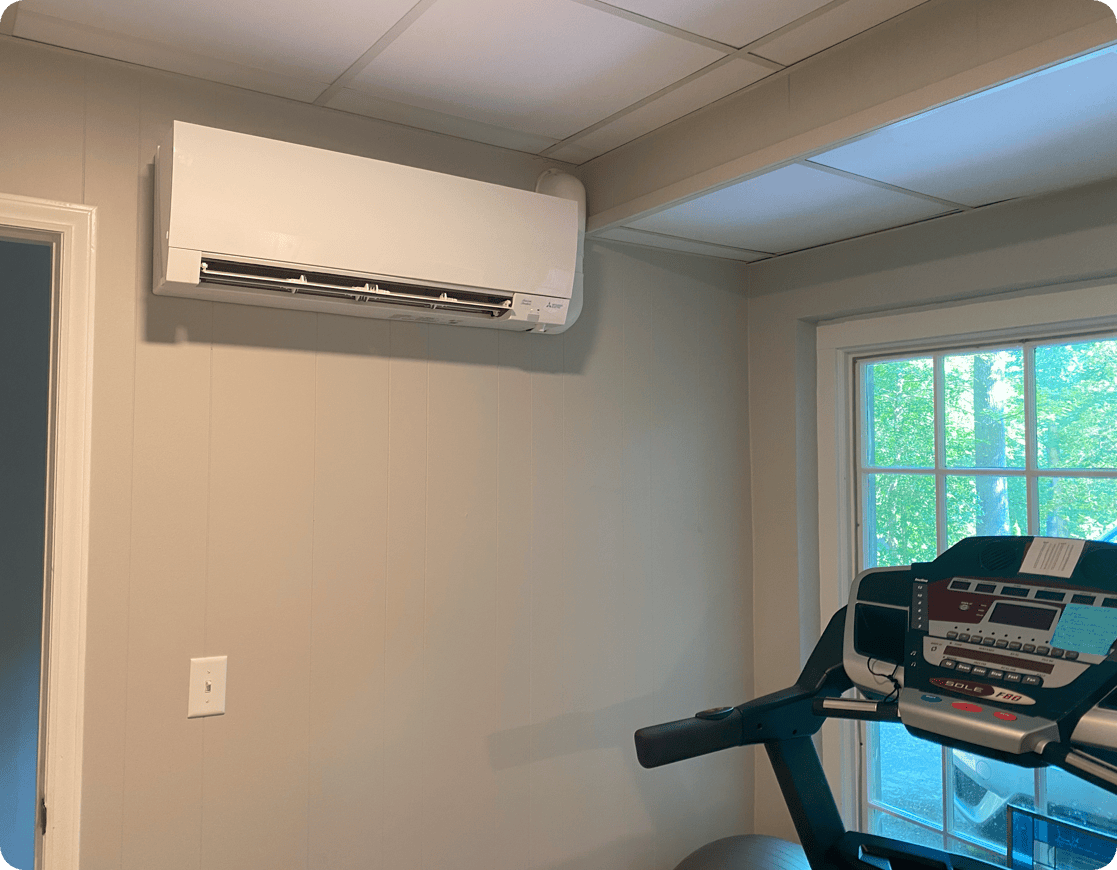
Average Mini Split Installation Cost In Chilhowie, VA?

Average Mini Split Installation Cost In Chilhowie, VA?

Average Mini Split Installation Cost In Chilhowie, VA?The cost to install a ductless mini split system, in Chilhowie, VA, can greatly vary. A mini split cost typically ranges from $4,000 to $16,500+.
As you can see this is a wide price range, and there are a few different factors that play a role in the cost. For one, the price can drastically change based on the type of system—single room or single zone mini split, multi-zone mini split system costs, and so forth. What brand are you installing? What level of energy efficiency does it have?

So, what should you expect to pay? And, how can you save on your mini-split installation cost?

How Does A Mini Split Work?

To understand the cost of a mini split, it’s nice to know how it operates. A mini-split system or a ductless mini-split system operates similarly to a traditional HVAC system. The compressor and condenser, the external components of the system, transfer heat through the refrigerant lines to the air-handling unit inside your home.

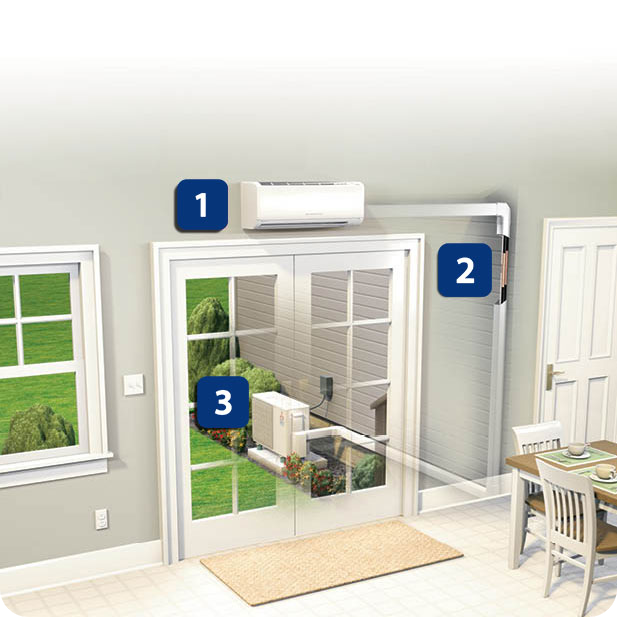
How Ductless Air Conditioning WorksThis unit disperses the heated or cooled air into the designated zones controlled by a thermostat. The conduits that carry the refrigerant lines, power cable, suction tubing, and condensate drain are hidden in some line set that runs along the wall, offering an aesthetically pleasing solution compared to traditional duct systems.
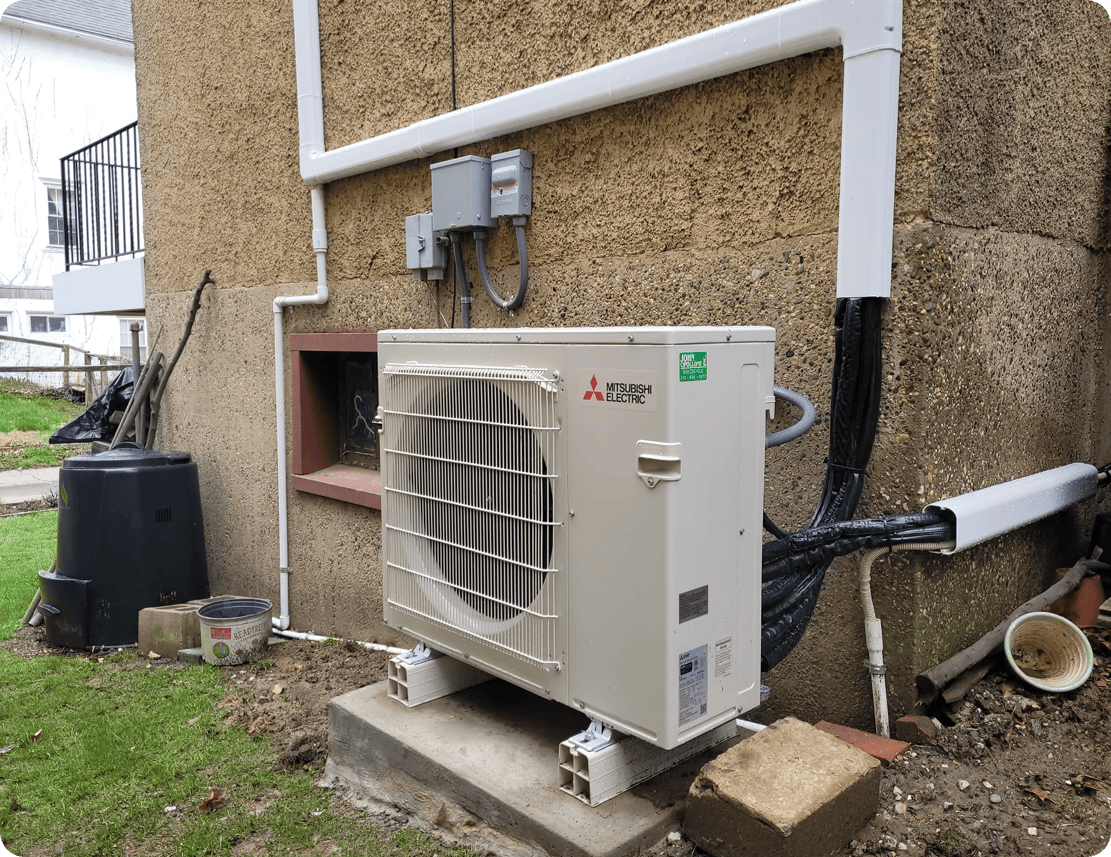
Single-room systems usually have one condenser unit outside linked to one indoor unit, while a multi-zone mini-split system connects multiple indoor units to a single outdoor unit. A single outdoor unit can usually handle between 4-8 inside units.

This heat transfer process leads to increased energy efficiency. Not needing ductwork is also a benefit. Ducts can cost a lot to install, and installing them can be messy and time-consuming.

DIY Vs. Professional Mini Mini Split Installation

Lots of homeowners like to give DIY projects a try, and in lots of cases that’s a fun, cost-saving idea. When it comes to installing any HVAC system, we highly recommend leaving it to the professionals. Any HVAC system, especially a ductless mini split system, is a big investment. The last thing you want is a faulty installation that leads to your system not working properly, or dying prematurely.

It’s important to note that installing a mini-split system requires special tools and expertise. While a DIY project might seem cost-effective, it may lead to improper installation and costly repairs down the line. It’s recommended to rely on HVAC technicians for a thorough and efficient job. Furthermore, professionals are more experienced in handling electrical outlets and other mini-split installation questions.

Mini Split Components

The cost of installing a mini split in a Chilhowie, VA home depends on various factors, including the HVAC system’s unit size, type, efficiency, and brand.

Components such as the condensate removal pump, condenser stand, drain pan heater, wall mount bracket, and the location of installation (wall-mounted unit, ceiling, or floor-mounted unit) are other factors that determine the cost. This is something that your technician should go over with you when you are deciding what system you want for your home.

Heat Pump

A Ductless Mini Split Uses A Small Sleek CondenserThe heat pump, also known as the condenser unit, is the outdoor unit of the mini split system. It’s the system’s engine, controlling the refrigerant flow to the indoor units. This is the component that takes in the air from the outside, and extracts the heat. It also dispells hot air in the summer.
Air Handlers

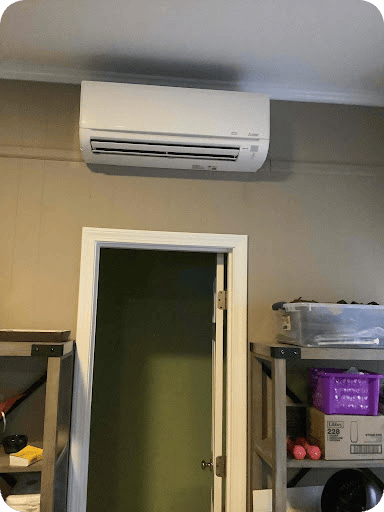
The air-handling unit, also known as the indoor unit, comes in various models, including wall-mounted, floor-mounted, and ceiling cassette.

Wall-Mounted

The wall-mounted unit is the most popular type of air handler due to its low cost and ease of installation. This hangs up on the wall, out of the way, and disperses conditioned air evenly.

Floor-Mounted

The floor-mounted unit is another option, preferred for its quiet operation and ability to evenly distribute conditioned air. These can work in certain spaces, and are good if you don’t want the system hanging on the wall.

Recessed Ceiling Cassette

The ceiling cassette model is installed into the ceiling, and it provides 360-degree airflow, cooling or heating the room evenly. This looks like a vent, just placed in the ceiling.

Linesets

The linesets are a combination of refrigerant lines and conduits. They connect the outdoor and indoor units, carrying refrigerant and power to the air handlers. They usually run along the side of your home, and can be colored to fit the right aesthetic.

Important Factors Affecting Mini Split Cost

The cost of a mini-split system in Chilhowie, VA, is influenced by several factors, including the size of the space you are trying to comfort, what brand you are choosing, and how energy efficient the system you choose is.

If you have a larger space, you are going to need more than one zone. If you are using the ductless system as a supplement to a current HVAC system, you may only need one zone. If you choose a highly efficient unit, it will be more expensive, but also will keep energy costs lower for the next 10-20 years. As you can see, it’s not a “one cost fits all” solution.

Single Zone Vs. Multi-Zone

As we’ve mentioned, a single zone system is going to be cheaper than a multi-zone system. The more units you need, the more it will cost. There are instances where you can keep your current HVAC system, and install a single zone to fix a problem room or an addition.

Zoned HVAC Systems Save Energy And Improve Comfort

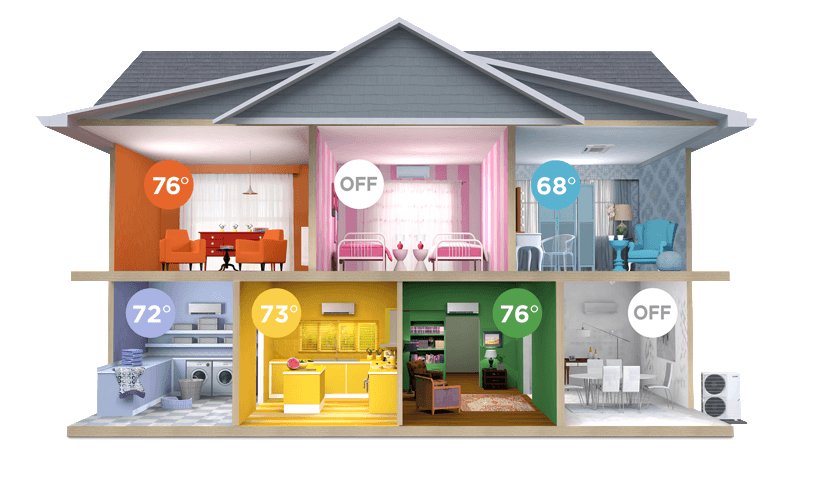
A Single zone ductless mini split usually starts around $4000, and can go up to $7000 depending on the unit. For a multizone system, it usually starts around $8000, and goes up from there.

Square Footage

The square footage of your house or rooms can affect the cost. Larger spaces require more powerful systems, thus increasing costs.

For example, in rooms with very high ceilings, you are going to need a more powerful system to fill the space. If you have rooms with low ceilings, you won’t need as powerful of a mini split.

Cooling Only Vs. Heating

If you’re looking for a mini split air conditioner, the cost may be different from a system that also offers heating. There are different models that offer just cooling, and other that offer BOTH heating and cooling.

Even though the ones that heat are more expensive, we find that it helps to control energy bills year round, and it also frees you up from having to install a heating system as well.

Energy Efficiency

Units with higher SEER ratings, indicating higher efficiency, might be more expensive initially but can offer savings over time due to lower energy consumption. Most people only think about the installation cost of a new HVAC system, but don’t think about the cost of running it.

You are going to have your new HVAC system for the next 10-20 years after installation. If that system ends up saving you $75 a month during the cooling season, and let’s say you have your system for 15 years:

4 months of the year for cooling, at $75 a month means $300 a year.

If you have the system for 15 years, that’s a savings of $4,500 over the lifespan of the system. Obviously there are other factors that come into play, but you can easily see how operating costs can be cut significantly when you have the more energy efficient heating and cooling system.

How to Reduce Your Ductless Mini Split Installation Cost

You can reduce your ductless mini split installation cost by considering factors like the number of zones, time of year, manufacturer rebates, and federal and local incentives.

Number of Zones

Selecting a system with the correct number of zones can ensure efficient operation and avoid overspending on unnecessary capabilities. Your HVAC technician should be able to design your system so each zone is comfortable, and you don’t overcompensate and install an unnecessary unit.

Manufacturer Rebates

Keep an eye out for manufacturer rebates, which can help lower the cost of your system. Many manufacturers will offer rebates for newer, high efficiency HVAC equipment. The experts at Complete Comfort can help you find the right rebates for your new HVAC system.

Federal and Local Incentives

Various federal and local incentives, including tax credits and rebates, are available for energy-efficient systems, which can help offset installation costs. The Inflation Reduction Act offers tax credits up to $2000 for high efficiency heat pumps, and $600 for ACs and furnaces with the proper ratings.
Once again, the experts at Complete Comfort can help you sort through what systems qualify for what rebates and tax credits there are available.

What to Ask Before A Mini Split Installation

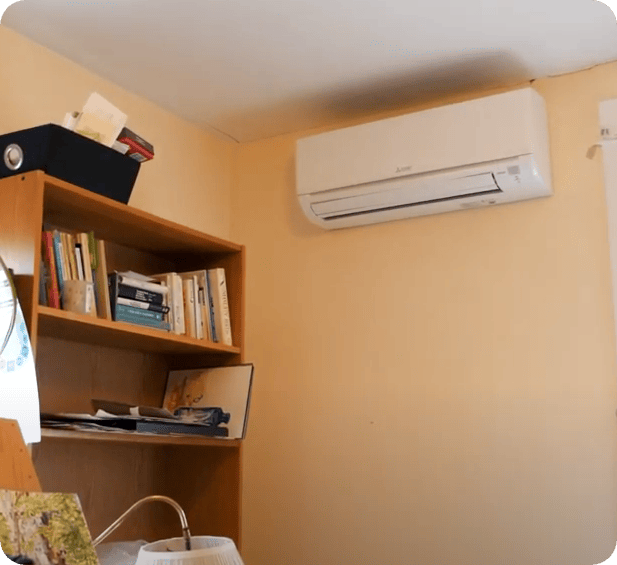
Ductless Mini Splits Are Hung Out Of The WayBefore your mini split installation, be prepared to ask your HVAC company various questions. Topics should include costs, permits, warranties, and other relevant considerations.
If you want a specific kind of system, make sure they know. A trusted HVAC contractor is going to offer you their recommendations, but they should make sure they are addressing your needs. If you want zoning in your home, let them know. If you have bedrooms that never get cool in the summer, it’s something you should address before they make a recommendation.

If you contractor struggles to explain their recommendations, or can’t answer your questions, it’s time to find a new HVAC contractor.

FAQs

Here are some of the most common questions we get when it comes to installing a new ductless mini split.

What is the labor cost to install a mini split?

Labor costs can range from $500 to $4000, depending on factors such as unit size, complexity of the installation, and the HVAC company’s pricing.

Why do mini split systems cost so much to install?

The cost reflects factors such as the quality of the system, the difficulty of installation, and the number of zones being served. These systems are state of the art, high efficiency technology, and last for years. It means you are going to pay more up front, but less over the life of the system.

Do mini splits devalue a house?

Actually, mini splits can potentially increase a home’s value due to their energy efficiency and room-specific temperature adjustment capabilities. Even though you pay a lot for them up front, you see that ROI in energy savings, and increased property value.


While the cost of installing a mini-split system in Chilhowie, VA, might initially seem high, it’s an investment that pays off in the long run, thanks to energy savings and improved comfort. As a homeowner, making an informed decision on the right system for your needs, and understanding the factors that contribute to the overall cost, can go a long way in ensuring a satisfying and worthwhile installation experience. Give us a call at (276) 690-9222 or click here to contact us online!

5 Advantages Of Ductless Mini Splits

5 Advantages Of Ductless Mini Splits

5 Advantages Of Ductless Mini SplitsFor years central heating and cooling was considered the best way to heat and cool your home. Now, ductless mini splits are becoming an increasingly popular choice for homeowners, offering a slew of benefits that traditional heating and cooling systems simply can’t match. Here are five key advantages of ductless mini splits: 
  • No Ductwork Needed
  • Superior Energy Efficiency
  • Zoned Heating And Air Conditioning
  • Whisper Quiet
  • Can Heat And Cool

No Ductwork Needed

One of the major advantages of ductless mini splits is right there in the name: they are ductless. This means they do not require expensive, intrusive ductwork throughout your home to function. It’s one of the reasons it makes them ideal for older homes where installing ductwork could be disruptive and costly. They’re also great for new builds or extensions, like a sunroom, where space may be limited.

Ductless systems consist of an outdoor condenser unit and one or more indoor air handlers. These components are connected via a small conduit, which requires just a tiny hole in the wall, minimizing the aesthetic and structural impact on your home.

The lack of ductwork also minimizes the potential for energy loss, which can occur in ducted systems due to leaks and poor insulation.

Superior Energy Efficiency

Ductless mini split systems are extraordinarily energy-efficient. According to the Department of Energy, duct losses account for about 20% to 30% of the energy consumed by forced-air systems. Ductless mini splits, in contrast, have no ducts to leak, reducing this energy waste considerably.

Additionally, most ductless mini split systems use inverter technology, which allows the compressor to speed up or slow down based on the system’s needs, rather than simply turning on and off.

With some other air conditioners, you will notice the temperature going up and down as the system turns off and on. There may also be more hot and cold spots in the house depending on when the air kicks on and off. Using this inverter technology results in more precise temperature control and less energy consumption.

Zoned Heating And Air Conditioning

Different Zones Allow You To Customize Your Comfort And Save Energy

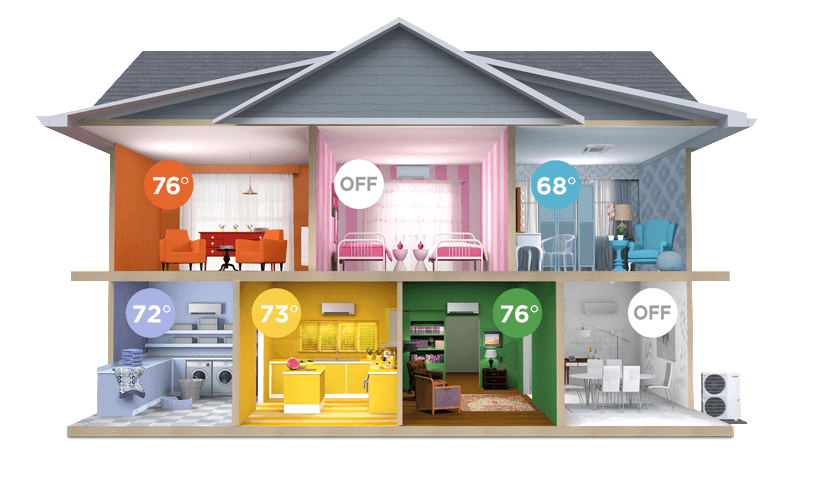
Ductless heating and cooling allow you to create different zones around your home. If you install 3 different mini splits around your home, that means you have created 3 different zones.

Zoned HVAC lets you heat and cool different spaces independently. This means that you can have one mini split at 72 degrees, another running lower at 75, and then one not running at all in a zone that isn’t being used. This zoned HVAC design gives you more control of your heating and cooling, and also helps you save energy.

One of the biggest energy wasters with whole home HVAC solutions is heating and cooling rooms that aren’t being used. Zoning your system eliminates that errant use and save energy.

Zoned HVAC will also be able to stop fights over the thermostat! One person can have their space at their desired temperature, while another can change their zone to what makes them comfortable.

Whisper Quiet

Unlike traditional HVAC systems, which can be rather noisy due to the fan and the ductwork, ductless mini splits operate very quietly. The noise they produce is often compared to a whisper, making them ideal for bedrooms, home offices, or any area where a peaceful environment is desired.

This quiet operation is due to the fact that the noisiest parts of the system – the compressor and the condenser – are located outdoors. The indoor units contain only the fan and the evaporator, both of which operate quietly.

If you’ve ever tried to watch TV in a room where a window AC unit is being used, you know how annoying a loud air conditioner can be! Ductless air conditioning is FAR quieter and creates a more peaceful environment in your home.

Can Heat And Cool

In addition to being efficient and quiet, ductless mini splits are versatile. Most models offer both heating and cooling capabilities, allowing you to keep your home comfortable year-round. This can be a major advantage in climates that experience both hot summers and cold winters, like ours here in Chilhowie, VA. Instead of installing one system to heat and another to cool, a ductless mini split can do both!

Not only can you toggle between heating and cooling as needed, but you also have the flexibility to control temperatures room-by-room, as we mentioned before. Each indoor air handling unit can be controlled independently, offering a level of customization and control that traditional systems can’t match.

How Ductless Mini Splits Work

A ductless mini split system is a heat pump, and works by transferring heat rather than creating it. During the cooling process, the system absorbs heat from inside your home and transfers it outdoors. In heating mode, the process is reversed: the system extracts heat from the outdoor air and transfers it inside.

This heat transfer is made possible by a refrigerant, which circulates between the outdoor and indoor units through the conduit. This refrigerant absorbs and releases heat as it moves between the two units, efficiently maintaining the desired temperature in your home. This process allows you to reduce your energy consumption, and lower your energy bills.

Ductless Mini Splits VS Window Units

While both ductless mini splits and window units provide a way to cool a space without ductwork, there are significant differences between the two. Ductless systems offer greater efficiency, quieter operation, and the ability to both heat and cool your home.


Window units, on the other hand, are often less efficient, noisier, and only capable of cooling. They also take up your window for an entire summer! They can also pose a security risk, with burglars using them as an access point to get into your home.


Plus, they must be installed and uninstalled seasonally, whereas a ductless system provides year-round comfort with a single, unobtrusive installation.


Ductless mini splits offer a bunch of advantages, including energy efficiency, quiet operation, versatility, and the elimination of the need for ductwork. Whether you’re constructing a new home, renovating an older one, or simply looking to improve your home’s comfort and efficiency, a ductless mini split system might be the perfect solution.


If you are looking into a new AC or heating system for your home, give us a call at (276) 690-9222, or click here to contact us online!